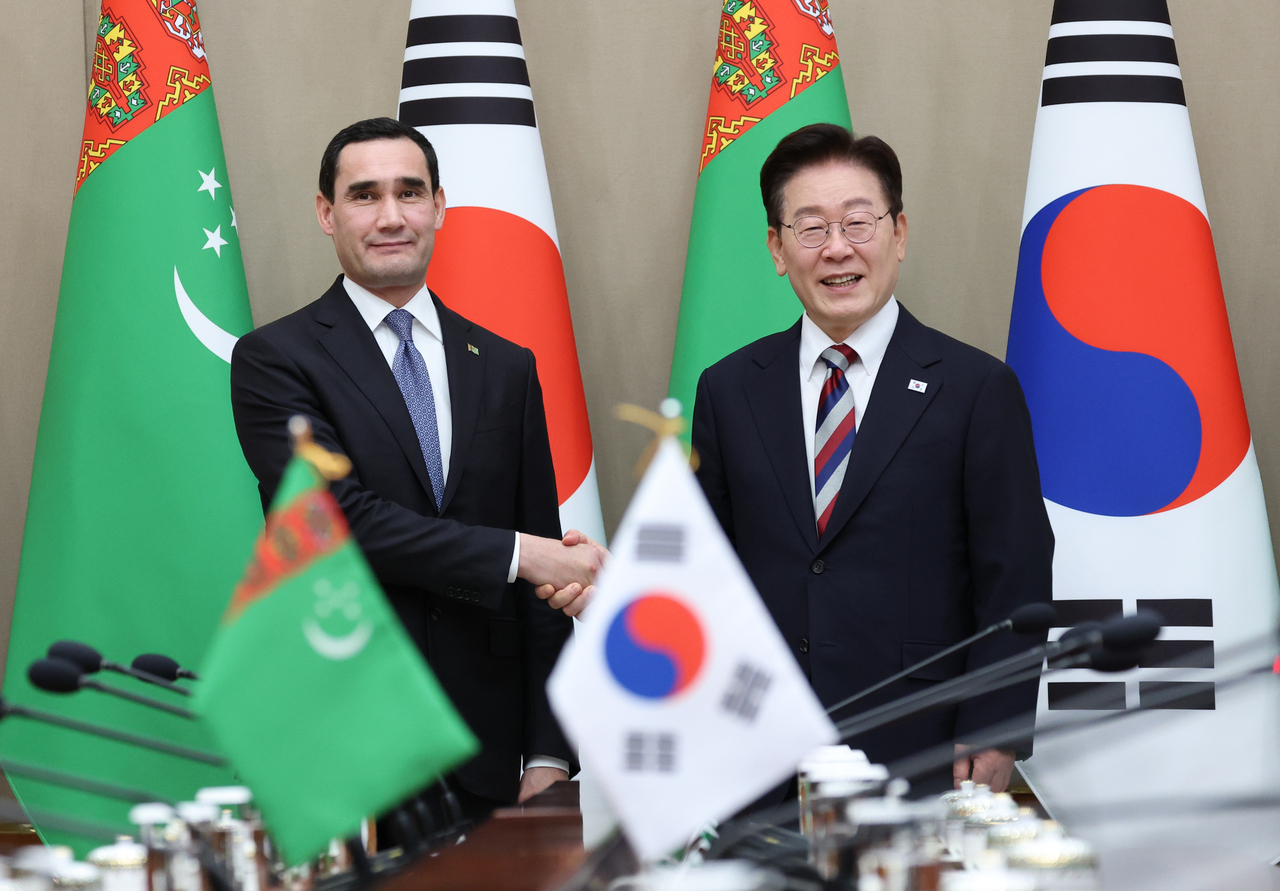
South Korea and Turkmenistan are seeking to deepen economic cooperation in energy, industrial plants and shipbuilding, building on a relationship in which large-scale Korean-led projects have played an outsized role despite relatively modest bilateral trade.
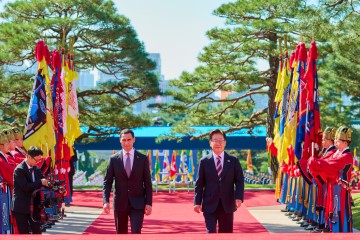
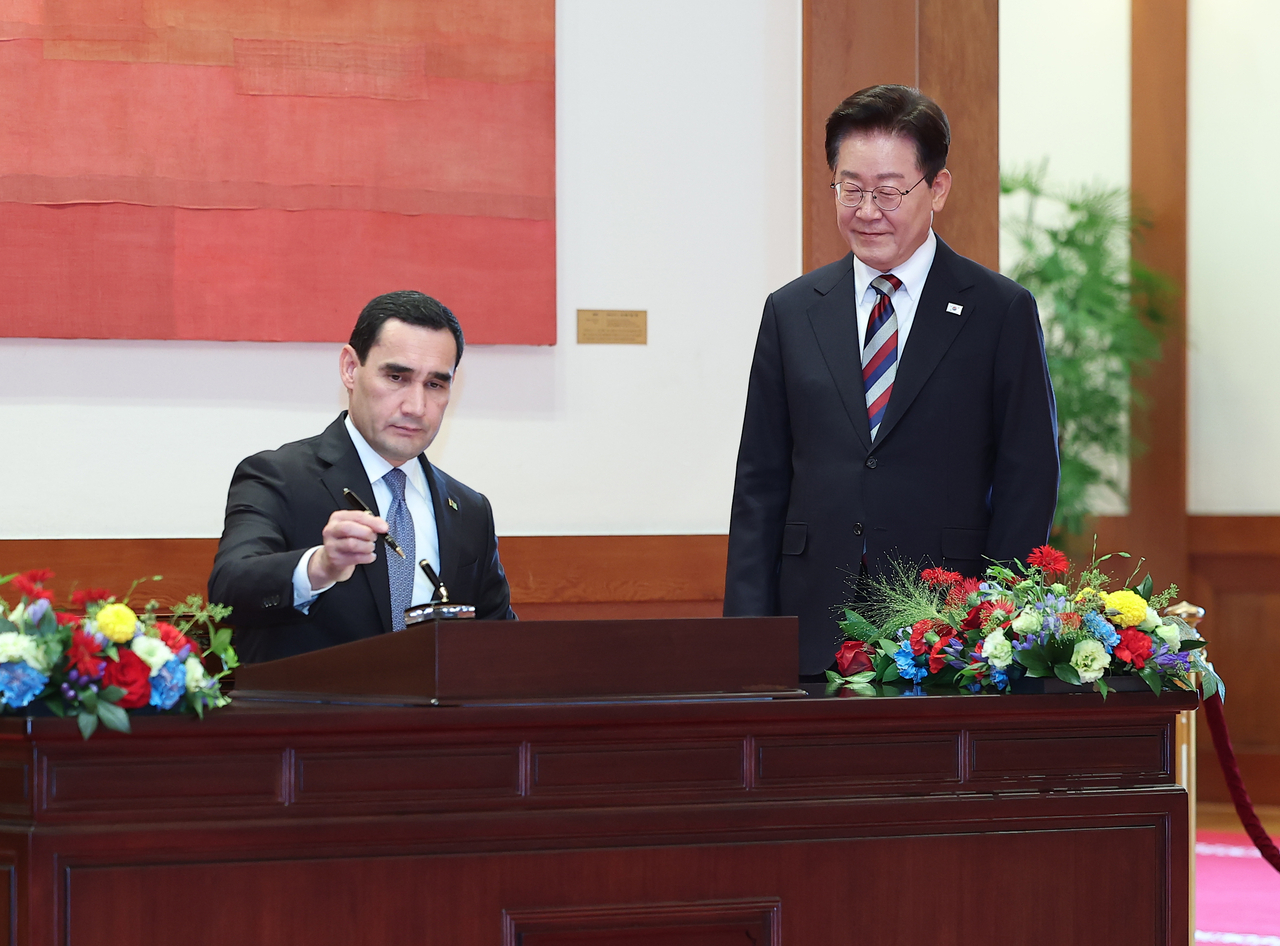
The push comes as Turkmen President Serdar Berdimuhamedov makes his first visit to South Korea since taking office in 2022.
“Since establishing a mutually beneficial partnership in 2008, South Korea and Turkmenistan have developed cooperation centered on areas such as industrial plants and energy,” a South Korean Foreign Ministry official, declining to be named, told reporters Monday.
“As this marks President Serdar Berdimuhamedov’s first visit to South Korea since taking office, the visit provides an opportunity to renew the foundation of trust and communication between the two leaders and jointly explore the future direction of bilateral relations,” the official added.
The growing emphasis on major projects contrasts with the relatively small volume of conventional merchandise trade between the two countries.
According to the South Korean Embassy in Turkmenistan, citing Korea International Trade Association data, bilateral trade totaled $45.2 million in 2025, down 20.6 percent from $56.9 million a year earlier.
The report released early this year also showed that trade is heavily tilted toward South Korean exports. South Korea imported only $34,000 worth of goods from Turkmenistan last year, mostly clothing, textiles and related products.
South Korean machinery exports to Turkmenistan increased from the previous year, while shipments of vehicles and automotive parts, ships and steel products declined.
The embassy expects trade to pick up this year, saying, “Exports to Turkmenistan are expected to increase significantly in 2026, driven in part by fertilizer plant construction projects involving South Korean companies.”
One major project behind that outlook is a $784 million mineral fertilizer plant being built by South Korea’s Daewoo Engineering & Construction in Turkmenabat, eastern Turkmenistan.
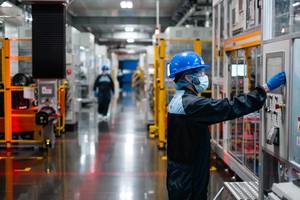
Daewoo E&C signed the contract with Turkmenistan’s state-owned chemical concern Turkmenhimiya in May 2025 and broke ground on the project in October. The facility is designed to produce 350,000 metric tons of superphosphate and 100,000 tons of ammonium sulfate annually, with Turkmen authorities expecting it to help meet domestic agricultural demand while expanding the country’s fertilizer exports.
Economic ties between the two countries have traditionally centered on major infrastructure and energy projects, reflecting Turkmenistan’s vast natural gas resources and South Korean companies’ engineering and construction expertise, a foundation for major bilateral projects.
One prominent example is the Kiyanly Polymer Plant on Turkmenistan’s Caspian coast.
The large complex was built by a consortium led by Hyundai Engineering, with LG International — now LX International — and Japan’s Toyo Engineering. More than 120 South Korean companies participated in the project.
The plant, which processes natural gas to produce higher-value petrochemical products including polyethylene and polypropylene, was commissioned in October 2018. The project has been regarded as a major showcase of South Korean engineering and technological capabilities in Central Asia’s industrial plant sector.
Cooperation has also expanded into shipbuilding.
At the Balkan Shipyard, South Korea’s Koryo Shipbuilding Industry Technology Co., Ltd., or KSIT, is working with the Turkmen shipyard on the construction of two 6,100-ton multipurpose cargo vessels. The first vessel was delivered in May, while construction of the second vessel is underway.
The two governments have also sought to establish a broader institutional framework for economic cooperation in recent years.
In 2024, Turkmenistan became the third Central Asian country, after Uzbekistan and Kazakhstan, to establish a Trade and Investment Promotion Framework with South Korea. The nonbinding framework provides a broader institutional basis for cooperation in areas including energy and the green and digital economies.
The overall outlook also comes as the Turkmen economy continues to expand.
Turkmenistan’s government said foreign trade turnover increased 9 percent year-on-year during the first seven months of 2026, while retail sales rose 10.1 percent, according to data released by Seoul's Foreign Ministry.
The country’s gross domestic product grew 6.3 percent over the same period, led by a 10.3 percent increase in transport and communications, an 8.5 percent rise in trade and an 8.4 percent expansion in services. Construction grew 6.7 percent, while industrial output increased 2.6 percent.
Overall production rose 10.4 percent from a year earlier, while capital investment increased 4.7 percent.
mkjung@heraldcorp.com